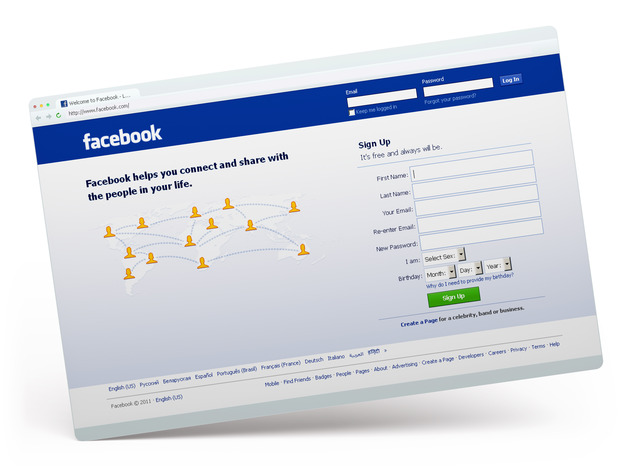
Top 10 Facebook Marketing Mistakes

So I saw that Janet Slack was doing a teleseminar on the top 10 Facebook Marketing Mistakes – but I didn’t get to attend. So I asked her if she could send me the recording or a transcript or something which I could learn from and then share here.

And she did just that.

In her own words, here’s Janet Slack talking about the top 10 Facebook Marketing Mistakes.

Marketing your small business on Facebook is the latest hot marketing trend.  But recent research shows that only 37% of businesses are getting new customers and revenues for their efforts.  Here are some of the mistakes you just don’t want to make with your Facebook marketing or you risk wasting time and effort.

more Top 10 Facebook Marketing (…)

Read Comments


Common Affiliate Marketing Mistakes

I’m not sure what the most common affiliate marketing mistakes are, but I saw an article by Jeff Herring today that clearly illuminated a big one. Jeff Herring (as he explains in this blog post) had the unfortunate experience of having YouTube disable his videos. Jeff wasn’t at fault and is contesting the shut down, but it clearly illustrates a common mistake affiliate marketers make.

YouTube, Facebook, Twitter, MySpace, Flickr and all things Google are not owned by you.  You may have an account,  and like Jeff Herring, you may be doing exactly what they want you to be doing. But the reality is you’re renting space.

Failing to understand that is the common mistake affiliate marketers make. They spend time hocking their products through these mediums WITHOUT capturing the contact information of those who are interested in what you’re talking about. Failing to use YouTube, Facebook and Twitter as traffic drivers to your website and opt-in form will trip up your long term plan.

Imagine if Jeff had spent his time telling you about great products he endorses and then sent you through his affiliate links directly to those products?  You would never be able to reach these people again. There would have been no information capture.

You may be saying “adding a step between the video and the sale will reduce the number of sales”, am I right? Because that wouldn’t be right at all.

Teasing a product in a video and then sending them to your website where they can get more information about the product and be further sold shouldn’t decrease the number of sales whatsoever. But more importantly, that extra step of information capture allows you to follow-up on your original information, provide more details, social proof and benefits.

Not only that, information capture gives you the opportunity to give your audience more useful information – when you want to provide it.

Jeff is a master at information capture, thus I was able to hear about his unfortunate circumstance through an e-mail he sent out. (That’s great transparency, community building and relationship making as well)

When you’re building your affiliate marketing strategy, don’t forget that you don’t own much of what you do on the internet. There was a day when MySpace and AOL were king – but how much are 5,000 friends on MySpace and your AOL Keyword worth today? YouTube videos can create a great constant flow of income – until people start using a new site or YouTube randomly shuts down your account.

And think of all the time you spend on these sites? Without driving your friends, fans and leads to some sort of lead capture funnel – all those hours of hardwork will someday be worth nothing. (In fact, I wrote a book called TwittrGlitch to help you secure your Twitter account from hackers, shut downs and other problems to avoid this exact situation).

One of the most common affiliate marketing mistakes that you can make is assuming that your web properties are your own. Don’t make that mistake and always be planning for the next Facebook Killer to come along and destroy what you’ve built.

Read Comments


A business to business marketing mistake

With permission I’m able to relay this business to business marketing mistake that one of my mastermind members made these last few months. We all knew that the change he made was responsible for the error – but it took a while to pin down the “why”.

So an autoparts wholesaler has a pretty comprehensive website when it came to the products they offered. Each part comes with its own spec that many needed but often did without.

more A business to business (…)

Read Comments


Social media marketing mistakes

Wow! I’ve had some great discussions about whether social media is the right step for small businesses. Some have involved the ROI of social media and others questions about manpower and dedication. I believe there are some important social media marketing mistakes you should avoid. So let’s explore whether social media, as a time and activity expense, makes sense for small business.

Part of my discussion involved chats with both Norma Maxwell of InsideWebMarketing.com and Kelsey Foster of ReadyClickContent.com. Our Facebook discussion started with Norma pointing out the success an acquaintance had spending $10/day in Facebook ads to create an audience of 15,000 “fans”. And both spoke highly of the community building that goes on with Facebook – expounding especially upon its importance in business.

I argued then and I argue now that despite those benefits, social media may not be the right step for small businesses. With the exception of one thing. . .

Small Business Responsibilities

To start, time is the most precious commodity a small business owner has – and is its greatest foe. And the responsibilities required to operate successfully are enormous. Consider the marketing, operations, taxes, licenses, customer interaction, research, follow-up, signage, trash, SEO, websites, phone books, computers, HR, etc. . . there is really an infinite number of things to do and an infinite number of expenses.

And small businesses normally have one source of income – customers buying their products and services.  From a week to week basis, a small business has to measure their expenses against their income – and no matter who you are if the income doesn’t exceed the expenses you go out of business. And even when the income exceeds expenses – if that doesn’t happen in a timely manner, a small business may not have the cash to pay its expenses and must shut down.

No matter how you slice the pie, there are only two ways to increase your revenue: 1. More customers OR
2. More money from each customer

What should I spend time doing?

That’s it.  Building a community on Facebook can certainly increase both – but the question is how long will that take for the “community effect” to turn into dollars? And could your time have been better used another way to achieve the same ends?

Time is finite.

So a small business owner must ask him/herself right now, should I be editing and producing a new radio ad with a call-to-action that will fill my pizza restaurant tonite, or answer questions and update Facebook that may begin to fill my pizza restaurant soon? You can’t say both – because in reality you can’t effectively be doing everything.

If you decide your time is best used doing social media, then some time later decide it’s better used elsewhere – how profitable will a dead, untouched Facebook page be for you? With dates on everything, a failure to interact is one of many social media marketing mistakes.

The only way Social Media makes sense

So here’s my caveat to that (that one thing I mentioned) – and the only reason I’d agree that you can do both. Repurposing. Every owner should be repurposing their activities. Here are some examples of repurposing that could set the stage for a great social media campaign:

    1. Instead of answering customer questions via e-mail, write a blog post and send the customer the link to it. Then post a corresponding link to it on your social media sites. You were going to answer the e-mail anyway, might as well turn it into a marketing activity. 

    2. Anytime you’re in a position to give your opinion, analysis or consult on something in your industry, film it or record it with an .mp3 recorder. You’ve then got a podcast segment, YouTube video, transcript, blog post, FAQ, slide show, etc. . . . You don’t have to use it right then and there – but you can never go back to get it later.

    3. Film your crew making the dessert special for the week, building a fence, fixing a roof, doing an estimate, or even cleaning the place. Don’t spend time setting the stage with that stuff – show your customers who you are.  Make every moment something you could market. Besides you were going to do it anyway, might as well make it a marketing moment.

    4. Ask the news media to come to anything you can. While you’re doing your thing – they’re driving business. (And then you can save the article from the news media website,  and post it to your own. You can also print it and mail it to your customers. The ideas are infinite with PR).

I don’t think social media is always the best step for small business – unless it’s truly thought out and you know the costs associated with spending time on Facebook versus calling and thanking your customers – or any of the other 1,146 things you could be doing to increase revenue.  A failure to plan is truly failure to avoid the many potential social media marketing mistakes that happen to many.

Read Comments


Social Marketing Mistakes Exposed

Strangely, I encountered two businesses this week whose social marketing mistakes exposed their lack of business acumen. They were both using social marketing as part of their plan BUT neither really understood how to marry it to their business. No matter how you slice it, if you’ve chosen to add “social marketing” to your mix – you’re still marketing!! The normal rules still apply. Bad Examples of Social Marketing

The people at Dinosaur World in Cave Creek, Kentucky provided my first example of bad social marketing decisions. I had purchased tickets to Dinosaur World for myself and my kids on Groupon.com.  You may not consider Groupon to be social marketing, but know that it’s growth comes almost entirely from people in the social sphere.

I had no trouble with Groupon or the people at Dinosaur World on this trip. In fact, they were great. What was odd was the conversation I had with Dinosaur World about the value of Groupon. The extent of their Groupon followup was a sheet where they marked off the names of people who used the coupons (to prevent fraud). . . and . . . actually that was it.

That was it. They didn’t know if Groupon was providing to them the database of e-mail addresses. They weren’t tracking how much Groupon users were spending in the gift shop. They didn’t provide a coupon or flyer asking us to come back. . . nothing. It was almost as if the idea of Groupon was a novelty.

Poor social marketing examples

My second dealing was truly social marketing gone awry. At my local Daily’s Convenience Store, I stopped in to get a soda and noticed the Foursquare symbol in the window. Hmmm. . . So I checked in on Foursquare and asked the attendant if there was a Foursquare special.

By the way just because these marketing mistakes exposed a weakness in their overall strategy, doesn’t mean I didn’t receive great customer service – nor does it mean they lost me as a customer.

Anyway, he was quite excited to get out their book and see what the special was. I believe it was a free $.99 soda. Yay! That’s what I went in to buy.  He then asked what the password was. I looked at my Foursquare checkin, noticed I had also just became the Mayor, and showed it to him. “Foursquare isn’t giving me a password”, I said.

He said “well, I’ll need the password for the special”. Now the notebook is open so I can see the password plain as day, but I didn’t want to just fake that I got it from Foursquare. Then he said something like “. . .you get the password when you check in on Foursquare in Facebook and then it’s on the Facebook page”.

Hmm. . . yep. Someone at Daily’s didn’t quite understand how to explain it to the clerks. After all the time spent putting the program together, the value was lost on me because the clerk didn’t get it. We argued for 10 more seconds about it, but ultimately I bought the $.99 soda I was excited to get free.

The lesson is simple. Social Marketing is Marketing.  Just because it’s new and trendy doesn’t mean you get to skip the education. It doesn’t mean you can do Groupon and not see how to benefit on the other side.  We’re talking about businesses here – not romper room and not your 7th period study hall project.

If social marketing isn’t making you money – maybe there’s something wrong with your business strategy – not my Facebook habits.  Think about what kinds of problems social marketing mistakes will have exposed.

Read Comments


Email: Avoiding Marketing Mistakes

Save yourself some time and check out these tips. Avoiding marketing mistakes in your e-mail marketing program will save you time, improve your delivery rate and enable you to actually make logical and progressive changes.

Today a friend, with whom I work on a website, forwarded me 42 e-mails to add to our newsletter autoresponder.  He’d been sending them out one by one from his e-mail address, and that’s been working very well.

But the autoresponder takes him out of the mix. It allows him to concentrate on other things while his e-mail campaign works on autopilot for him.

Another good thing about e-mail marketing, in general,  is the ability to learn what your customer’s really want.  That’s really a vital part of the purpose of e-mail marketing – the autoresponder just makes it easy to keep going without getting tired of sending out e-mails yourself.

Finding out what people want is easy, if they click on it, it was interesting to them. Imagine a furniture store that sends an e-mail with a kids couch/desk combo link and a decorative botanicals link.  Imagine how useful it would be to automatically put those customers into two separate piles based on which one interested them? That would make it easy to send even more relevant e-mails, wouldn’t it?

Avoiding Marketing Mistakes in your email

Well, that’s the power of a good e-mail marketing program, but not what I learned loading up 42 e-mails. The service we use has a “spam” meter that tells you what level of spaminess your e-mail will trigger when sent out. Too spammy and you know it will likely be filtered out or end up in the junk e-mail folder.

So I loaded up all 42 and got to see the spam number on each, as a whole. I was amazed at the number of them that got “Super Spam” written all over them.  So I carefully went through the body copy and headlines changing little things (the list below) in each until they were all in good shape.

If you can avoid making these mistakes, your e-mail is going to fly through the filters and make it to your customers’ inbox:

In the Subject Line. .

  • Don’t use dashes or hyphens
  • Also, make sure not to use the word “Don’t”
  • Delete all punctuation except commas. And skip using quotes as in: Check out this “tasty” treat
  • Avoid the use of the ellipsis. That’s the thing that looks like this . . .
  • Avoid the use of the phrase “is going to be about”
  • Capitalize the first word, but not any other words. If you can avoid using proper nouns, that will be easier.

In the body of the e-mail

  • Make sure your e-mail has at least 3 sentences, and a link at the bottom that takes the person to the website the e-mail comes from. For example, if you send the e-mail as info@domain.com, put a link at the bottom to http://domain.com
  • If you’re given the option, choose to send the e-mail as html, but also check the box to allow the e-mail to be sent as text if the subscriber doesn’t accept html e-mails.
  • Finally and most importantly, follow all the Can-Spam Act rules enacted by Congress. They carry steep fines if you’re not following the rules. If you want to know the rules, you can get a copy here at Joe Marsh’s site.

That should do it. If I’ve missed something or if you’ve learned something we should add to this, leave everyone a note below.

Read Comments


Marketing Mistake: Indianapolis Zoo Prices

I recently wrote about how the airlines are very close to charging you more just to sit down – which I thought was ridiculous. But then I went and saw that the Indianapolis Zoo has similar logic to their policy.

It wasn’t the Indianapolis Zoo prices that prompted this post, it was the feeling I had when I left that made me wonder if they understand the value of integrating price changes with value changes. When word-of-mouth is crucial to your operation’s success, problems like these turn into a major marketing mistake.

Companies raise prices for a variety of reasons, the worst of which is when it seems arbitrary. Gas stations raise and lower prices daily in accordance with the economics of that commodity. Retailers will often raise prices as a pass-through of shipping and transportation increases. But the real winners are the companies that raise prices because they ultimately raise value.

That brings me to the Indianapolis Zoo prices. I recently attended the zoo, the day after they raised prices for the summer. In fact, the price went from $8.50 to $15.50. That price change shows up on their website and in their pamphlets as the summer price increase – which you clearly know months in advance. There’s nothing in their literature about the extra value they’re providing because of the summer change.

Unfortunately, the marketing squad and the operations department must not have been communicating. For this seasonal price change to make sense, there must surely be new stuff to see and do. I was OK with the raised prices until I came upon a bunch of exhibits that weren’t yet open, bathrooms that weren’t open, water fountains that weren’t usable and their brand new Warthog exhibit without . . . warthogs.

In their defense I’ll say they did open a bat exhibit, which was a small 8 x 12 pen where 6 bats were hanging. And they also opened an Orchid exhibit. Not too shabby, eh? Well it appears the bats were placed in an existing cage that once held some other animal – and the Orchid exhibit. . . it wasn’t in the zoo. It was outside and was free to all who ventured to see it.

As I spoke about in my post Adding Value with Giant Marshmallows, you should not feel you’re earned the right to raise prices – unless you know customers will appreciate the added value to their experience.

So I left the Indianapolis Zoo feeling jipped.  I got to pay double what yesterday’s crowd had to pay – yet the experience was just the same. What is the likelihood that future exhibits will garner my attention?

My question to you, to answer below, is are you looking at your company from your customer’s eyes? Are you judging the value of their experience from a cost perspective? from a user experience perspective? And are you taking into account the perceived value you must be providing when you raise prices? Start the discussion with your thoughts below.

Read Comments


Marketing Plan Mistakes – A Hallmark Case Study

Sometimes I’m surprised that big companies like Hallmark can make huge marketing plan mistakes. But I was flabbergasted that Hallmark really blew a huge opportunity the other night during their broadcast of the November Christmas movie.

I’m a sap, I must say and heard my wife ask no fewer than 3 times if it was OK to watch the movie. She knew I’d get teary-eyed 10 – 15 times and I knew it, too. Those Hallmark movies are good for that. But Hallmark goes above and beyond these days, they buy almost all the ad time and fill it with sappy commercials too.

more Marketing Plan Mistakes – (…)

Read Comments


Mistakes of search engine marketing

Typically I reserve this SEO case study information for my Dan’s Notes, but I thought I’d turn it into today’s blog post. Mistakes of search engine marketing attempts will certainly lead to no traffic. So here’s some tips to help you for sure.

I met with a group who needed marketing help this week, but they said they didn’t need SEO help – they needed Social Media help. That sounded fun, but after meeting with them, I realized they needed something I don’t do.

They needed someone to start and manage their social media. I don’t think any company should have an outsider speaking for them in the social media sphere so I can help them with the structure, design and strategy but they’ll have to do the social media interactions on their own .

I did send them some tips about their website SEO though, and thought I’d include them here.

WEBSITE PAGE NAME

I stumbled around the site for a category page to see how it was optimized. This was the url of that page: (I changed the site name so that link shouldn’t work).

http://www.holydoly.com/categories/281

Category pages are great pages to optimize for the search engines  because they see new content when anything new is added to that category.  However, their page wasn’t optimized for anything so let’s take a look at some things you could do.

Let’s start with their URL (http://www.holydoly.com/categories/281). Their site is about Gourmet Foods so the keyword Gourmet Foods should be in the url. Try something like  http://www.holydoly.com/gourmetfoods/ or http://www.holydoly.com/category/gourmetfoods/

TITLE BAR AND KEYWORDS

Secondly, the title tag (the words you see at the very top of the computer screen) reads: Gourmet Foods, by Holydoly – Your Source For Luxury Shops Online

Other than Gourmet Foods, none of those other terms are relevant to that category page. The title tag bar is more useful to search engines than buyers, so optimize it for the organic searchers. One of the mistakes of search engine marketing is to ignore how people search and assume you know what’s best.

And unfortunately, Gourmet Food and Gourmet Foods are really too difficult to compete in with a retail site. The other problem with the term Gourmet Foods is that it is a really broad term. Buyers start searching with wide terms and then narrow the search the closer they are to buying. Gourmet Foods is that “first search”.

Better, more targeted and easier to dominate keywords would include:

  • Gourmet food stores
  • Gourmet food retailers
  • Gourmet food gift basket(s)
  • Gourmet food online

These are the terms I’d focus on for this page. I’d then change the title tag to something like:

Gourmet Food Gift Basket | Gourmet Food Stores Online (you don’t need the name of your company in the title tag on a category page)

INCOMING LINKS

Now this is going to be a bit more advanced, but it is important. You really want to rank in the search engines for all four of those terms. So when you link to your site from other sites, use those terms as the text that links back. We call that anchor text.

The words SEO Tips in this sentence are the anchor text links that lead back to this page.

One other thing, they don’t have any meaningful text on the page, just pictures of the products they’re selling. If you add a description on the page at the top, you’ll be able to use your keywords on the page. And a description can help build a story and pre-sell these items. I’d suggest having between 350 – 500 words per page – even if that means the text is scattered amongst the photos.

OPTIMIZING PHOTOS

Images need to be optimized. I right-clicked on a photo on the site and pressed “view photo”. The url at the top said:

    http://www.holydoly.com/images/HomePagePhotoRetouched.jpg

If you found that photo on their computer, it has the name HomePagePhotoRetouched.jpg, but the photo itself was of gourmet wine. They need go back to the photo on their computer and rename it gourmet-foods-wine-online.jpg or something like that – and then upload that to their website. (there probably are better gourmet wine keywords than that).

Other than some additional information about the internal linking structure of their site, that’s pretty much what we discussed. If you can think of some other general SEO tips to look for onpage, leave a comment. Otherwise, sign up for Dan’s Notes (below) and read more about our meetings.

Read Comments


Marketing Strategy Mistakes

Most businesses don’t consider empty tables as marketing strategy mistakes. But with good tracking of your peak hours, a marketing plan can be developed to take advantage of the slow times. For some businesses this lack of marketing strategy can leave them in dust when the unexpected happens.

I used to manage the Stadium View Club Restaurant in Omaha, NE atop Rosenblatt Stadium, home of the College World Series. We had a pretty good business on game nights, and with the game schedule known in advance it was pretty easy to schedule the work.

The only problem that cropped up did so when it rained. Hard driving rain early in the day meant a called off game and likely a double-header the next night. No patrons – No money. And without tips, higher server turnover. If the rain started late in the game, we’d get hundreds of people from the stands coming up to wait out the rain in the restaurant. When that happened we were suddenly under-staffed, out manned and sometimes without enough food. Rain was a problem.  Patrons got angry and again, small tips for the waiters.

Bowling alleys do not fear the rain. For the most part rain doesn’t change the numbers. But rodeos, football games and school events do. When something big is happening in town on a Friday night, bowling alleys are libraries. Office clean-up, shoe shining and carpet cleaning are the only things that get done. Since Friday night is the money maker, empty lanes kill profitability.

And we all know about road widening. There’s a coffee shop in my town that’s about to go out of business because the road widening project has taken a lot longer than expected and has made it frustratingly hard to get in and out of the coffee shop. When you rely on drive-by traffic as your marketing strategy, road widening is a death-knell.

The Cure to Marketing Strategy Mistakes

But rodeos, road widening and rain don’t have to be business killers. We’ve said it many times before “hope is not a marketing plan”. In all three of those examples, the only traffic that comes in is the kind you hope for. And in some cases the traffic pattern becomes so regular that you even stop hoping. You just drone on.

Instead of relying on hope, implement some of the many strategies we talk about here. Collect names and e-mail addresses so you can keep in contact with your customers. Give them reasons to come in. Have contests, specials and promotions on slow nights so you no longer have to settle for low profitability.

With e-mail address bowling alleys can reach customers when they hear school has been called off due to snow. With text messaging, coffee shops can send out special discounts on the days that construction has made it the hardest. And the stadium restaurant should clearly e-mail their clientele to let them know that parking for the restaurant will be really easy since the game was called due to rain.

Your business can be run better if you currently rely on hope. And you don’t have to spend money on marketing to get new customers. Start by thanking and giving to your existing customers. Give them a reason to be happy you’re there for them. Whether it’s entertainment, information or products – you can always be helping to improve the lives of your customers.

Hope is not a marketing plan.

Be proactive. Get my weekly notes and start implementing some new strategies today.

Enhanced by Zemanta

Read Comments


Last updated by at .


If You Liked Your Visit, Share This Blog With Others

Bad Behavior has blocked 1073 access attempts in the last 7 days.